Open today from 9h00 to 19h00 Visit today
Operations commenced on the night of June 5 to 6, 1944, with airborne troops being parachuted down while heavy bombers pounded the coastal artillery batteries deemed to present the greatest danger. Meanwhile, an armada of 5,000 ships (including a thousand battleships) crossed the English Channel and took up position off the beaches. They were not spotted by the Germans, who were battered by the storm that still raged and weakened by the loss of their radar stations over the previous few weeks. The surprise was therefore total. At 5:45 a.m., the battleships opened fire on the Atlantic Wall defenses, while the landing craft carrying the first assault waves drew nearer their targets.
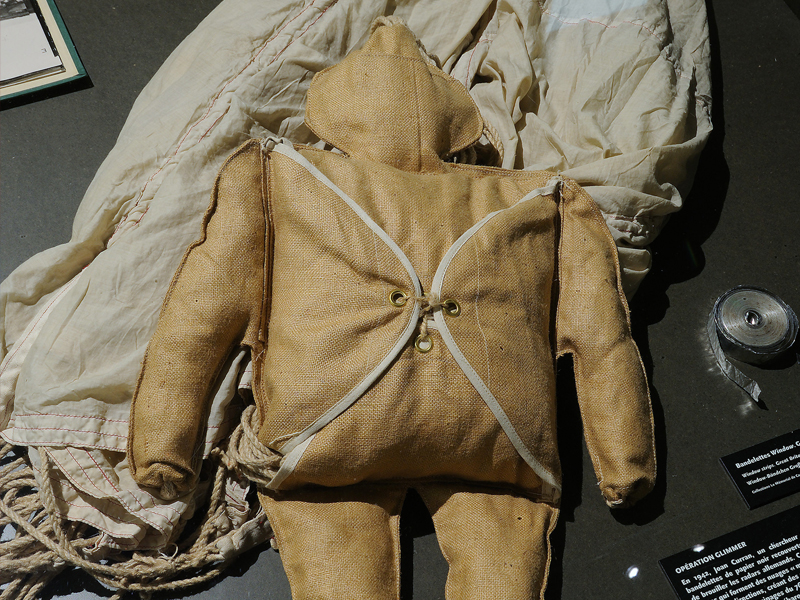
At 6:30 in the morning, the American 4th Infantry Division under General Barton, supported by amphibious tanks, reached the La Madeleine dunes on Sainte-Marie-du-Mont beach.
Coastal currents had carried their landing craft two kilometers south of the planned location, where the landings would have been a good deal more dangerous. Weakened by air and sea bombardment, German resistance was low. The Americans suffered only minor losses, with some 50 dead and around 150 wounded. By early afternoon, they had joined up with the 101st Airborne Division.
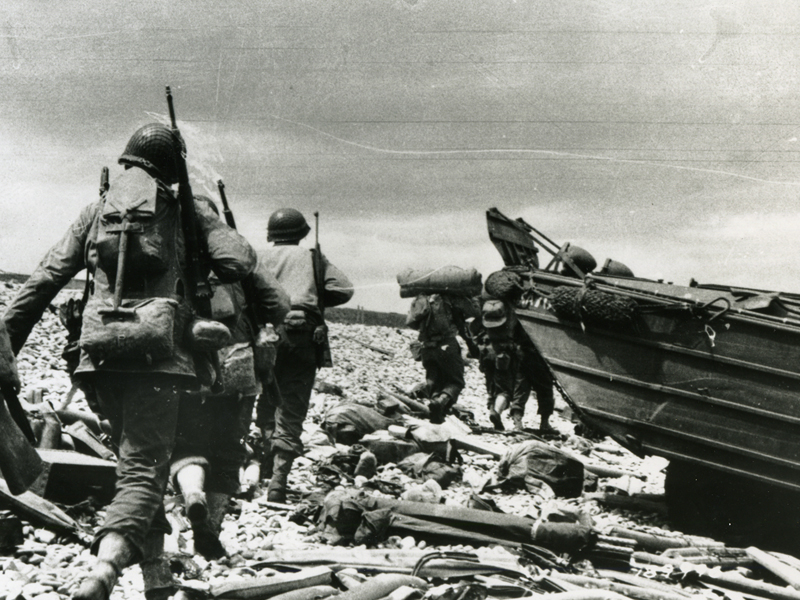
Omaha Beach forms a 7-kilometer indentation between Vierville and Colleville-sur-Mer, with cliffs on either side. It was overlooked by a sheer embankment bristling with field guns, mortars and machine guns.
The Allies were well aware of the dangers of an assault on a spot that seemed like an inevitable trap, but it was the only possibility. Inaccurate bombing had left German defenses almost intact – and these were further reinforced by the unspotted arrival of the 352nd Infantry Division. In the morning of June 6, the men of the 1st and 29th American Divisions, under the command of Generals Huebner and Gerhardt, suffered full-scale carnage. Pinned down on the beach in the midst of dead bodies and burned-out equipment, it took them almost 6 hours to extricate themselves, climb the embankment and reach the plateau that overlooked it. By the evening, they had only managed to penetrate a mere 2 kilometers inland.
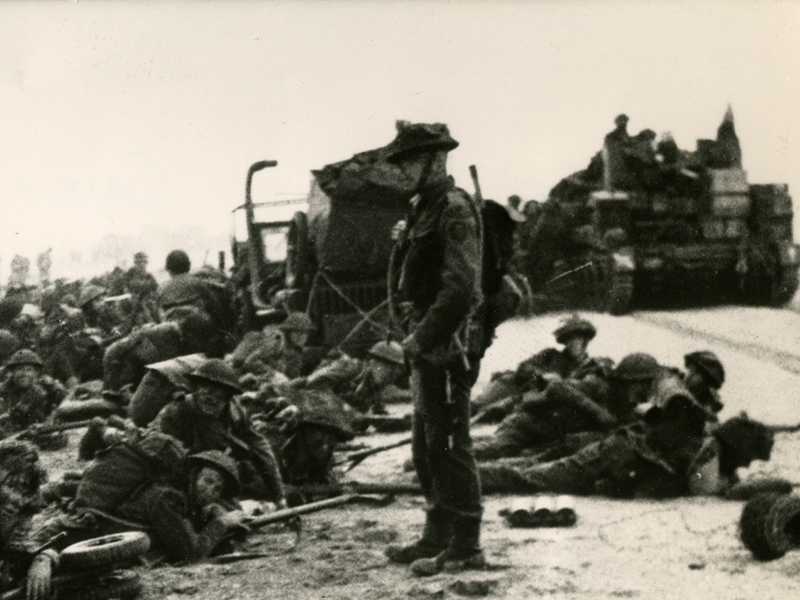
The sector to the west of the Orne, between Langrune and Ouistreham, was strongly fortified.
General Rennie’s 3rd British Division had also been reinforced by two special commando brigades. The landing took place at Hermanville and Colleville. Heavy fighting was required to take Ouistreham. During the afternoon, Lord Lovat’s Special 1st Brigade reached the Ranville and Bénouville bridges (Pegasus Bridge) and joined up with the paratroopers. The 4th Brigade, however, was struggling to take Lion and Luc-sur-Mer, leaving a breach between Sword and Juno through which a detachment of the 21st Panzer Division infiltrated in the evening and reached the sea, only to turn back again. The core component of the plan, the larger portion of the 3rd Division, had been delayed by German fortified positions and failed to take Caen as planned.
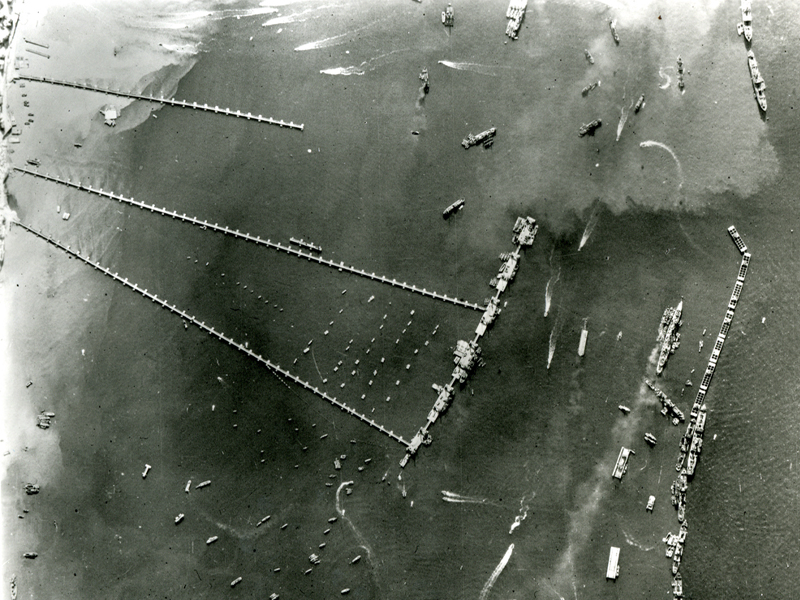
The British 50th Infantry Division under General Graham reached Asnelles and Ver-sur-Mer at around 7:25 a.m.
German resistance was strong at both ends of the landing zone, but the enemy troops were pushed to the center and were unable to prevent the British from penetrating inland. In the evening of June 6, the 50th Division’s vanguard was at the gates of Bayeux, which they entered the following day without bloodshed. Meanwhile, late afternoon, the 1st Hampshire Regiment moved along the coast and took Arromanches, where one of the artificial ports was to be set up.
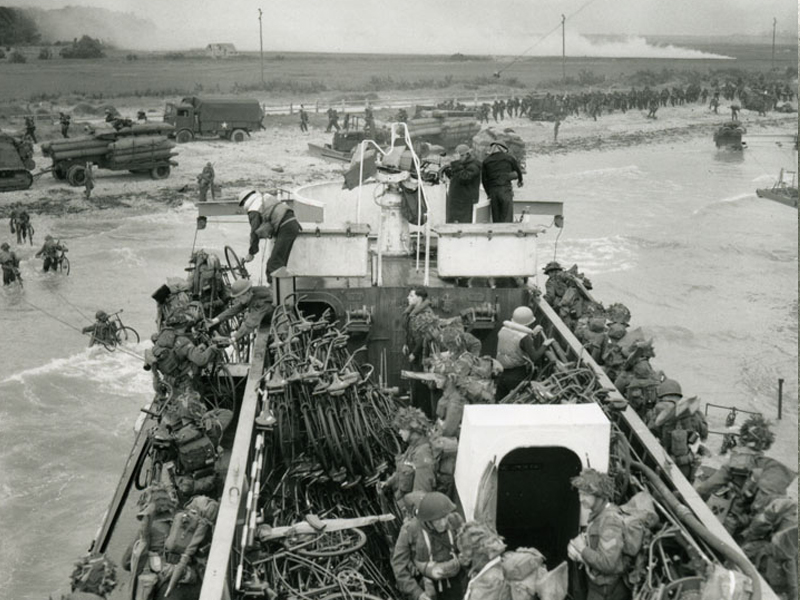
The sector between Courseulles and Saint-Aubin was put in the hands of General Keller’s 3rd Canadian Infantry Division, supported by the 48th Commando of the Royal Marines.
With coastal reefs making navigation difficult, the landing craft were late in arriving. They reached the shore at high tide and came straight up against the obstacles that Rommel had put in place, causing heavy casualties and obstruction of the beaches. After some fierce fighting and the loss of a thousand men (including 300 killed), the Canadians finally managed to join up with the British forces that had landed at Gold Beach and establish a solid bridgehead a dozen kilometers deep (the record for the day). They had not, however, achieved two of their objectives – Route Nationale 13 and Carpiquet Aerodrome.
You might also like

4,6
23 149 avis